
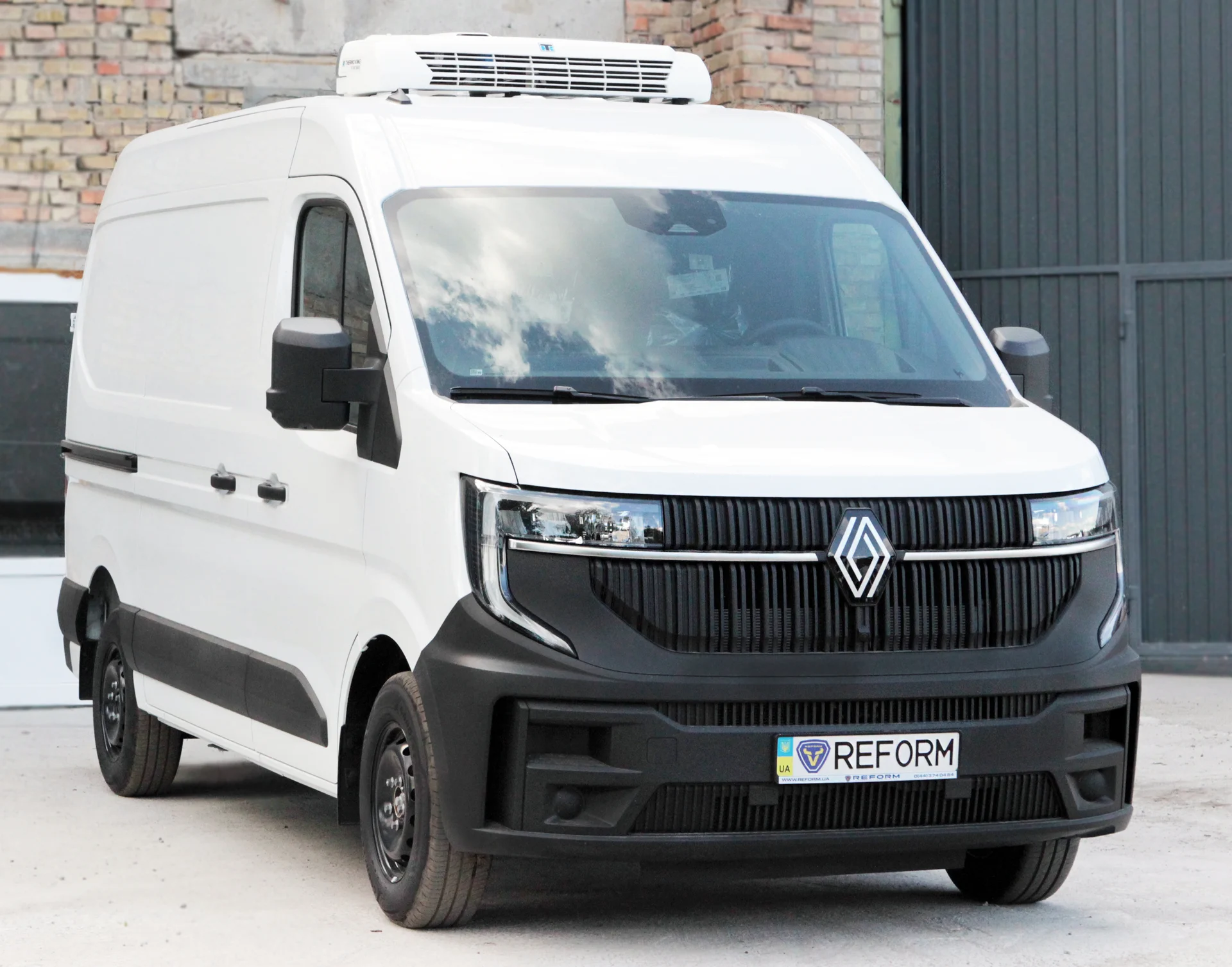

Refrigerator car
Refrigerated vans are designed to transport products in the temperature range from -20 ° C to +20 ° C, which is provided by refrigeration equipment from world manufacturers.
You can buy a refrigerator in Ukraine in the company "Reform", which manufactures a variety of specialized automotive equipment for many industries. The purchase of a refrigerator is necessary for a customer who is engaged in the transportation of goods and cargo that require special low-temperature conditions of storage and delivery. Car refrigerators are needed to transport food, medicines and various chemical solutions and products.
The company "Reform" will help you choose and buy a refrigerator in Ukraine of any brand and on the basis of different chassis. The proposals from Reform will satisfy the customer, as each model will meet its requirements.
Technical characteristics of Reform car refrigerators
Carriers engaged in transportation inside and outside the country need specialized vehicles that are equipped with the latest technology and have the latest technical characteristics. Reform offers to buy both general and special purpose refrigerators. In addition, there is a classification of this type of machine by the generated temperature. Models belonging to the first category maintain a temperature of up to + 1 ° C, they are used to transport refrigerated products. Machines of the second category transport goods in frozen form, their temperature can be in the range from -20 to +10 ° C.
Refrigeration units are mounted on the basis of various chassis, including Peugeot, Citroen, Mercedes-Benz, Ford, Renault, MAN, Iveco, etc.
Properly selected car with reliable technical characteristics will rely on safety and save on operating costs.
Isothermal car
Isothermal van - a vehicle that transports goods that require certain temperatures. It provides optimal conditions for such cargo, thus eliminating its damage. Isothermal vans are designed to transport food, medicines and other products.
Depending on the task, the required temperature, as well as the customer's budget, the specialists of the company "Reform" will select the optimal configuration of isothermal van based on a reliable chassis.
Types of isothermal cars
Depending on the type of construction, isothermal vans are:
- food van;
- frozen goods van;
- van for transportation of pharmaceutical products;
- van for transportation of fresh flowers;
- water transport van;
- pantechnicon;
- van for transportation of marketable eggs;
- van-shop for outbound trade;
- animal transport van;
- a van for transporting bakery and confectionery products;
- caravan;
- without refrigeration unit;
- with the built-in refrigerating unit;
- with hook suspension;
- ice cream or eutectic.
Isothermal cars also differ in their thermal insulation properties and capabilities. Thus, there are:
- Vans with optimal thermal insulation - heat transfer ≤ 0,7 W / m²h ° C at temperatures from 0 ° C to + 12 ° C;
- Vans with enhanced level of thermal insulation - ≤ 0,55 W / m²h ° C at a temperature of -10 ° C to + 12 ° C;
- Vans with particularly enhanced thermal insulation - ≤ 0,4 W / m²h ° C, at a temperature of -20 ° C to + 12 ° C;
- Vans with the maximum level of thermal insulation - ≤ 0,25 W / m²h ° C, temperature from -32 ° C to -18 ° C.
When installing thermal vans in the base car used for these purposes, significantly increase depreciation, as the frame of the vans gives a significant load on the chassis. In addition, isothermal cars have some differences in materials for walls, floors and ceilings. Due to these features, such vans can withstand a weight of up to 3 tons.
The standard specification of isothermal vehicles includes:
- galvanized footrest;
- handle for lifting in a stainless steel van;
- latches of door leaves;
- reflectors;
- rubber buffers on the rear frame;
- plastic wings and mudguards;
- bumpers;
- LED markers;
- interior lighting;
- locking fittings.
The design of the van can be made using solid or type-set sandwich panels of different thickness and filling, with minimal heat dissipation:
- Solid sandwich panel made of high-quality extruded expanded polystyrene, veneered on both sides with reinforced fiberglass, manufactured by Lamilux, Germany with additional roving shockproof coating.
- Typesetting sandwich panel made of polyurethane foam, veneered with galvanized sheet metal. The panels are connected by a lock type "pin in the groove", which provides a tight connection to the insulation with no "cold bridges".
Depending on the type of products transported, the inner lining of the panels may be different (fiberglass, plywood, aluminum, etc.). The floor in the van has a monolithic, multilayer, thermally insulated, self-supporting structure. There are several flooring options to choose from: self-leveling, aluminum, moisture-resistant plywood, etc.